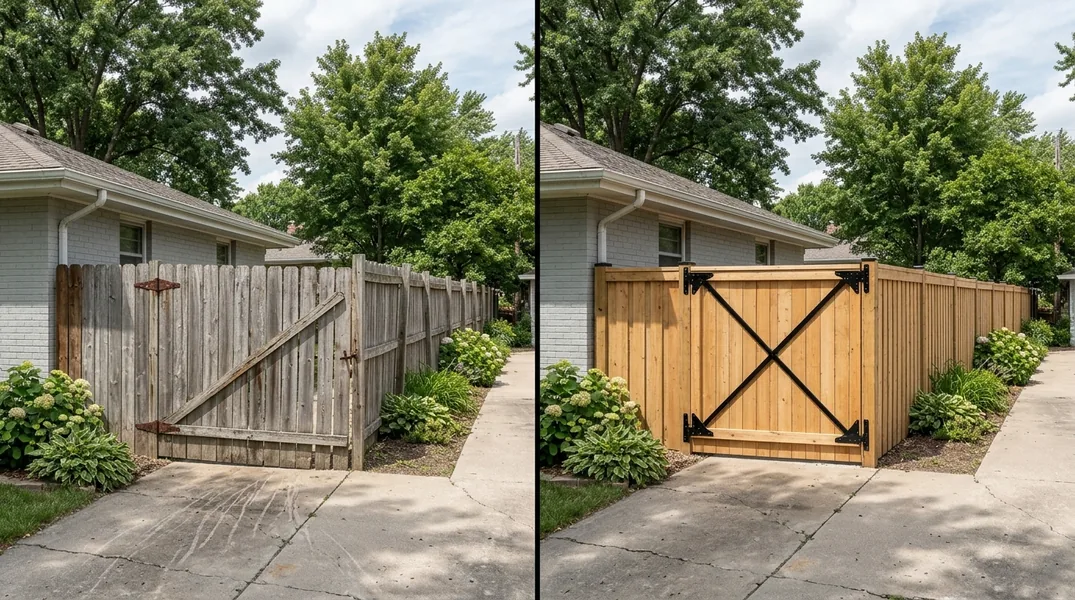
Why Cedar Fences Need Staining in Des Moines
Cedar is the most popular fencing material in Des Moines for good reason. It is naturally resistant to rot, it looks beautiful, and it holds up well when properly maintained. But "naturally resistant" does not mean maintenance-free. The same weather that makes Iowa a great place to live also puts serious stress on a wood fence. Summer sun bakes the boards, winter ice and snow sit against the wood for weeks, and spring rain keeps the pickets damp for days at a time. Without a protective coating, that cycle slowly breaks down the lignin in the cedar, turning a rich brown fence gray and brittle within a couple of seasons.
Fence staining and fence sealing are the two-part defense against that cycle. Staining adds pigment that blocks UV damage, while sealing creates a water-repellent barrier that keeps moisture from soaking into the grain. Together they slow the natural aging process, reduce cracking and warping, and keep your fence looking sharp for years. If you recently installed a new fence through our Wood & Privacy Fence Installation service, staining is the single best thing you can do to protect that investment.
How Iowa Winters and Wet Springs Damage Unprotected Wood
Wood is porous, and cedar is no exception. During a wet Iowa spring, fence boards absorb moisture and swell slightly. When winter arrives and temperatures drop below freezing, any trapped moisture expands as it turns to ice. That freeze-thaw cycle is what causes the fine cracks, splintering, and raised grain you see on older fences around the metro. The damage is cumulative: each season opens the wood a little more, letting in more water and eventually inviting rot and mildew.
UV exposure compounds the problem. The summer sun breaks down the surface fibers of untreated cedar, which is why an unstained fence fades to a silvery gray. That gray look is not just cosmetic; it signals that the wood's natural oils have been depleted and the surface is now more vulnerable to moisture. A quality stain with UV inhibitors and a penetrating sealer applied before winter gives the wood a fighting chance through both the wet and cold seasons. Homeowners in Ankeny and across the metro face the same conditions, which is why we recommend sealing every two to three years as part of a normal maintenance routine.
Fence Staining Cost in Des Moines: What to Budget
Most homeowners want a straight answer on fence staining cost before they book anything, and that is fair. In the Des Moines area, professional fence staining typically runs somewhere between $1.50 and $3.50 per linear foot, depending on the height of the fence, the condition of the wood, and whether a thorough cleaning or light repair is needed first. A standard 150-foot privacy fence usually lands in the $300 to $550 range for a basic clean-and-stain job, while larger properties or fences that need extra prep work will run higher. For an exact figure based on your yard, you can review our current pricing or request a written quote.
It helps to think of staining as preventive maintenance rather than an optional upgrade. Replacing a cedar privacy fence is a multi-thousand-dollar project, while staining every few years costs a fraction of that and can extend the life of the fence by five to ten years or more. If your fence is brand new, wait a few weeks for the wood to dry and for any factory moisture to escape before sealing. If it has been sitting unpainted for years, a good cleaning and possibly a light sanding will be part of the job, and that prep work is what makes the stain actually last.
Fence Staining Near Me: Finding the Right Local Crew
Searching for fence staining near me usually turns up a long list of names, and not all of them are equal. The quality of a staining job comes down to prep work and product choice. A crew that power-washes the fence, lets it dry fully, and applies a penetrating oil-based or hybrid stain will give you a finish that lasts several seasons. A crew that skips the cleaning or sprays a cheap surface coating will leave you with peeling stain within a year. Ask any contractor what products they use, how they prep the wood, and whether they back their work.
Hiring a local company also matters because of timing. In Iowa, the ideal staining window runs from late spring through early fall, when temperatures stay above 50 degrees and the wood has a chance to dry between rain showers. A local crew knows the seasonal rhythm and can schedule around the weather. Des Moines Fence handles staining and sealing for homeowners throughout the metro, including West Des Moines and Urbandale. If you want a professional assessment of your fence's condition, give us a call at (515) 528-3444 or request a free estimate.
Staining vs. Sealing: What Your Cedar Fence Actually Needs
Homeowners often use fence staining and fence sealing interchangeably, but they serve different purposes and work best together. Sealing alone creates a clear water-repellent layer, which is a good option if you love the natural color of cedar and want to preserve it. Staining adds pigment and UV protection on top of that moisture barrier, which is the better choice if your fence has already started to gray or if you want a specific color. Many modern products combine both functions in a single penetrating stain-sealer, which is what we typically recommend for cedar in this climate.
Solid stains offer the most UV protection and hide imperfections, but they can peel over time and are harder to refresh. Semi-transparent and transparent stains let the wood grain show through and are easier to maintain, though they need reapplication more often. For most Des Moines homeowners, a semi-transparent penetrating stain every two to three years strikes the best balance between looks and protection. If your fence has been neglected for a while, a light cleaning and a fresh coat can bring it back surprisingly well. For fences beyond saving, our team can also discuss replacement options, including Vinyl & PVC Fence Installation if you want a lower-maintenance alternative.
When to Schedule Fence Staining in Des Moines
The best time to stain a cedar fence in Iowa is late spring through early fall, when daytime temperatures stay consistently above 50 degrees and the wood has 24 to 48 hours of dry weather to absorb the product. Staining in the heat of midsummer works too, but avoid applying stain in direct afternoon sun, which can cause it to dry too fast and leave lap marks. Early fall is often ideal: the weather is mild, the wood is dry after summer, and the fresh coat is in place before the first hard freeze.
If your fence is more than two or three years old and has never been treated, do not wait for the perfect window. Every season of exposure makes the prep work harder and the wood more vulnerable. A quick inspection now can tell you whether you need a simple refresh or a more thorough restoration. To schedule an assessment or ask questions about fence staining in Des Moines, call Des Moines Fence at (515) 528-3444. We will walk your fence line, check for damage, and give you a clear recommendation with no pressure.
Looking for a professional fence contractor in Des Moines? Des Moines Fence responds fast for all your fence needs.
Get a Free Quote