The Short Answer: There Is No One-Size-Fits-All Rule in Iowa
If you are planning a fence and wondering who pays for a fence between neighbors in Iowa, the honest answer is that Iowa law does not force your neighbor to split the bill. Unlike some states that have specific fence statutes, Iowa generally treats a boundary fence as a private matter between property owners. There is no statewide "fence law" that automatically makes both sides responsible for construction or maintenance costs. Instead, the outcome usually depends on where the fence sits, who wants it, and what you and your neighbor agree to in writing.
That said, local custom and practical reality often push neighbors toward sharing costs, especially when the fence serves both properties. A good neighbor fence, sometimes called a boundary fence, is built right on or near the property line and is designed to look the same on both sides. In Des Moines, where many lots are close together and privacy is a common concern, these shared fences are popular. But popularity does not equal obligation. Before you assume your neighbor will pay half, it helps to understand how property lines, city rules, and basic courtesy interact.
Fence on Property Line: What Iowa Law Actually Says
Iowa does not have a general statute that requires a neighbor to contribute to a fence on a property line. The Iowa Code addresses fences in specific contexts, such as livestock fencing and partition fences in rural areas, but for typical residential privacy fences in cities like Des Moines, the rules are much looser. In practice, this means that if you want a fence for your own privacy, you can usually build one on your own property without your neighbor's permission, as long as you follow local zoning and permitting rules. If you build entirely on your side of the line, you own it, you pay for it, and you maintain it.
The tricky part is when a fence sits exactly on the property line. In that case, ownership can become ambiguous. Iowa courts have sometimes treated a fence on the line as jointly owned if both parties treat it that way, but that is not a reliable assumption. The safest approach is to get a survey before building and to have a written agreement with your neighbor if the fence will straddle or touch the line. A simple document that states who pays for what, who maintains the fence, and what happens if one owner sells can prevent years of headaches. For homeowners in West Des Moines and similar suburbs, where lot lines can be tight, a survey is often the best money you will spend on the entire project.
Good Neighbor Fence: How Cost Sharing Usually Works
A good neighbor fence is a practical arrangement more than a legal one. The idea is simple: both neighbors benefit from the fence, so both share the cost. Typically, the neighbor who initiates the project gets quotes, shares them with the other owner, and they agree on a split, often 50/50. The fence is usually built on the property line or just inside one yard, and both sides are finished so it looks good from either direction. This works best when the fence is a true boundary fence and both parties have a say in the style, height, and material.
In Des Moines, good neighbor fences are especially common with Wood & Privacy Fence Installation, because wood is affordable, easy to customize, and can be built with a finished look on both sides. If you are considering a shared fence, put the agreement in writing. Include the total pricing, each person's share, the fence location, and who handles future repairs. A handshake is a nice start, but a written record protects both families if circumstances change. If you are not sure how to approach the conversation, a professional installer can often provide a detailed quote that makes the split easy to explain.
When Your Neighbor Refuses to Pay or Cooperate
Not every neighbor will want to share costs, and that is their right under Iowa law. If your neighbor declines to contribute, you still have options. You can build the fence entirely on your own property, which means you pay for it but also control the design and maintenance. You can also choose a fence style that provides privacy without requiring cooperation, such as a taller wood privacy fence set back a few feet from the line. What you should avoid is building on your neighbor's property without permission or assuming they will pay after the fact. That is how small disagreements turn into disputes.
If a fence already exists on the property line and needs repair, the situation can be more complicated. Iowa law does not give you a clear right to force a neighbor to split repair costs for a residential boundary fence. In practice, many homeowners handle this through conversation and compromise. If the fence is damaged and poses a safety issue, document the condition and communicate in writing. If the neighbor still refuses, you may need to consult a local attorney. For most routine projects, though, a polite conversation and a clear quote from a reputable installer solve the problem. You can request a free estimate to get the numbers on paper and make the discussion concrete.
Wood & Privacy Fence Installation Near Me: When to Call a Pro
Once you and your neighbor have agreed on who pays for what, the next step is getting the fence built correctly. A professional installer can handle the survey coordination, permit questions, and material choices that make a boundary fence last. If you are searching for wood and privacy fence installation near me in the Des Moines area, look for a local company that understands city setback rules and HOA requirements. A pro will also help you choose between wood, Vinyl & PVC Fence Installation, and other options based on your budget and privacy goals.
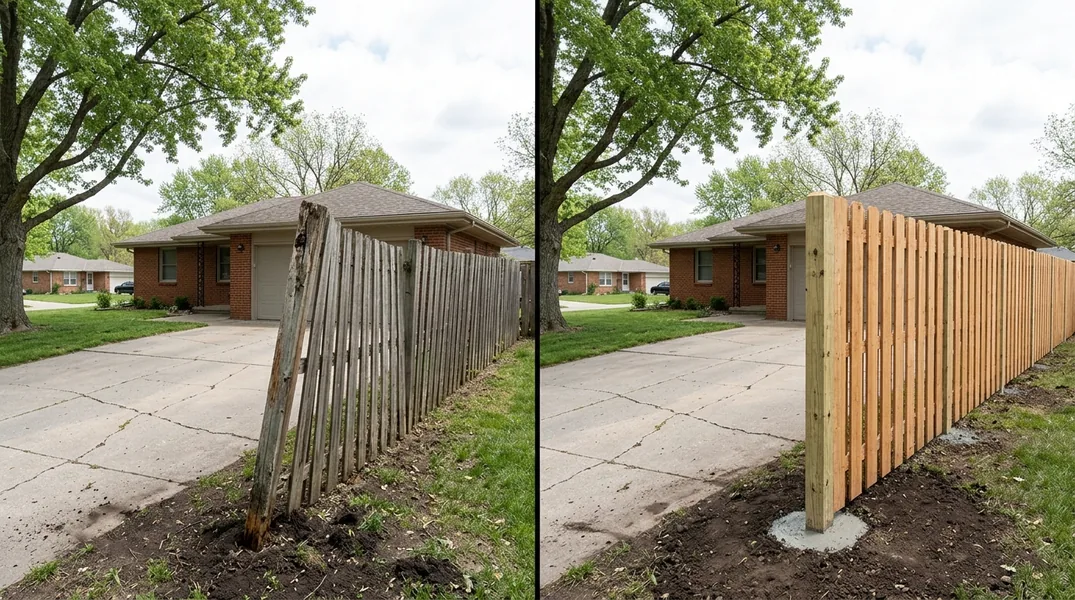
Professional installation matters even more when a fence is shared. A properly built good neighbor fence should have posts set below the frost line, consistent spacing, and a finished appearance on both sides. That quality helps prevent the leaning and sagging that leads to neighbor complaints later. If you are in Ankeny or Urbandale, local crews know the soil and weather patterns that affect fence longevity. Before you commit to a shared fence, get a detailed written estimate and share it with your neighbor so everyone knows the scope and cost. Call Des Moines Fence at (515) 528-3444 to talk through your options and get a clear picture of what your project will involve.
Practical Tips to Avoid Neighbor Fence Disputes
The best way to handle the who-pays question is to prevent it from becoming a conflict. Start with a conversation before you buy materials or dig holes. Explain what you want, why you want it, and whether you are asking for cost sharing. Listen to your neighbor's concerns about height, style, and placement. If they are not interested in sharing, respect that and adjust your plan. A fence that you own entirely is simpler to manage and avoids future disagreements about maintenance and replacement.
Put everything in writing, even if the agreement is simple. Include the fence location, who pays for materials and labor, who owns the fence, and how future repairs will be handled. Keep a copy for both households. If you are building near the property line, get a survey and follow local permit rules. And if you are hiring a contractor, make sure the quote clearly states the fence location and whether it is on the line or set back. For more help navigating your options, contact Des Moines Fence for a free estimate and practical advice tailored to your property.
Looking for a professional fence contractor in Des Moines? Des Moines Fence responds fast for all your fence needs.
Get a Free Quote