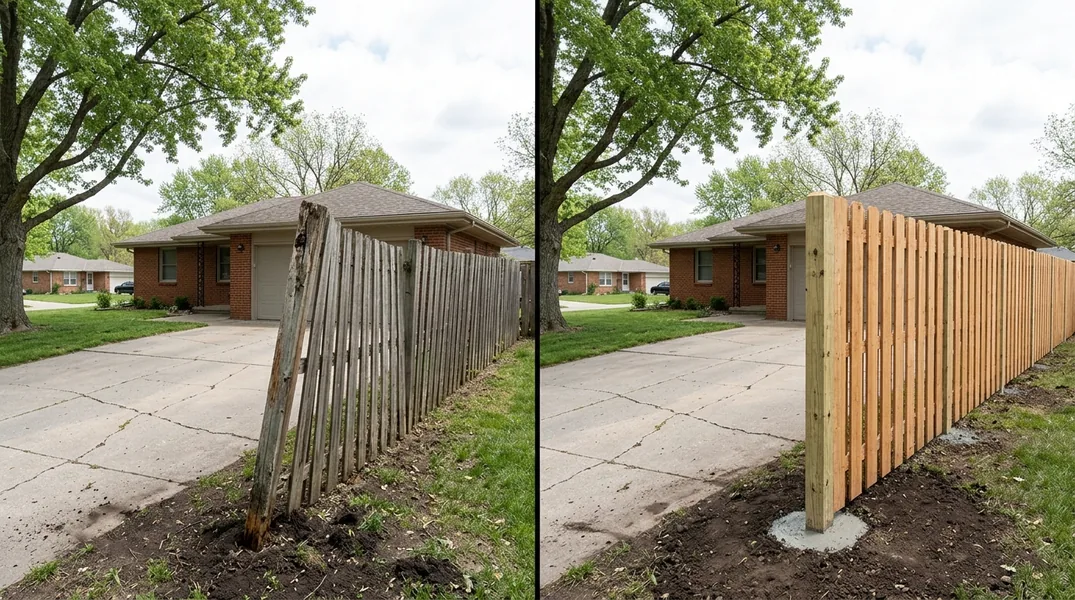
Why Des Moines Fences Lean: Frost Heave, Glacial Clay and the Right Fix
If you live in Des Moines, you have probably noticed that fences here have a tough life. Between the freeze-thaw cycles of winter and the heavy, expansive clay soil that underlies much of the region, a fence that looked straight last fall can develop a noticeable lean by spring. This is not just an aesthetic problem. A leaning fence can compromise privacy, reduce security, and signal deeper issues with the posts that anchor your entire fence line.
In this article, we will explain the two main culprits behind leaning fences in Des Moines (frost heave and glacial clay), how to tell whether you need simple leaning fence repair or full fence post repair, and what the right fix looks like. We will also cover when it makes sense to call a professional for frost heave fence posts or rotted fence post repair. Whether you have a wood privacy fence, a vinyl fence, or a chain link fence, the principles are similar, and understanding them can save you time, money, and frustration.
Frost Heave and Glacial Clay: The Soil Science Behind Leaning Fences
Des Moines sits on some of the most challenging soil in the Midwest. Much of the area is covered by glacial till, a dense mixture of clay, silt, sand, and gravel left behind by ancient glaciers. This glacial clay has a high shrink-swell potential, meaning it expands when wet and contracts when dry. In winter, water trapped in the clay freezes and expands, a process known as frost heave. When the ground thaws, the soil settles unevenly. Over repeated freeze-thaw cycles, this movement can push fence posts upward, tilt them sideways, or loosen them in their holes.
Frost heave is especially problematic for shallow or improperly set posts. A post that was set only two feet deep in glacial clay may heave several inches over a single winter. The result is a fence that leans, sags, or has gaps between pickets. Even a well-built fence can be affected if the soil around the posts is not properly drained or if the post holes were not backfilled with the right material. Understanding this soil behavior is the first step toward a lasting fix. For homeowners dealing with frost heave fence posts, the solution is not simply to push the fence back into place. The posts themselves must be reset or reinforced to resist future movement.
Leaning Fence Repair vs. Fence Post Repair: What Your Fence Needs
Not all leaning fences are the same. Sometimes the problem is limited to one or two posts that have heaved or rotted, and the rest of the fence is sound. In that case, targeted fence post repair may be enough. This typically involves digging out the affected posts, removing the old concrete or soil, and setting new posts with proper depth and drainage. If the fence panels are still in good shape, they can often be reattached to the new posts. This approach is usually faster and less expensive than replacing the entire fence.
However, if multiple posts are leaning, or if the fence is showing widespread signs of rot, warping, or loose pickets, then leaning fence repair might turn into a larger project. Rotted fence post repair is a common need in Des Moines because the combination of summer humidity and winter moisture can accelerate wood decay, especially at the base of the post where it meets the soil. In some cases, a post that looks fine above ground is hollow or soft below the surface. A professional inspection can determine whether repair is feasible or whether replacement is the better investment. For wood fences, we often recommend upgrading to pressure-treated posts and using gravel or concrete footings that extend below the frost line to prevent future heave.
The Right Fix for Frost Heave Fence Posts in Des Moines
The right fix for frost heave fence posts starts with proper depth and drainage. In Des Moines, the frost line is typically around 42 inches, so fence posts should be set at least 48 inches deep to stay below the frost zone. The hole should be wider at the bottom than at the top to create a stable base, and the bottom should be filled with gravel to allow water to drain away from the post. Concrete should be used sparingly and shaped to slope away from the post so water does not pool around it. For wood posts, a rot-resistant species or pressure-treated lumber is essential, and the cut end should be sealed or capped to prevent water intrusion.
If your fence is already leaning, the repair process begins with an assessment. A professional will check each post for stability, rot, and depth. Posts that have heaved can sometimes be reset by excavating around them, straightening them, and re-compacting the soil with additional gravel. Posts that are rotted or broken must be replaced. In some cases, a technique called post reinforcement can be used, where a new post is driven alongside the old one or a metal sleeve is used to stabilize the existing post. However, for long-term reliability, replacing compromised posts is usually the best choice. If you are considering Wood & Privacy Fence Installation as an alternative to repair, a new fence built with proper footings can eliminate recurring problems and improve curb appeal.
When to Call a Pro for Leaning Fence Repair Near Me
Some homeowners in Des Moines are handy enough to tackle minor fence repairs, but leaning fences caused by frost heave and glacial clay are often more complex than they appear. Digging out posts by hand in heavy clay is labor-intensive, and setting posts to the correct depth without proper equipment is difficult. Moreover, if the repair is not done correctly, the fence may lean again after the next freeze-thaw cycle. A professional fence contractor has the tools, experience, and local knowledge to diagnose the root cause and recommend the most cost-effective solution.
If you are searching for leaning fence repair near me, look for a company that specializes in local soil conditions and offers both repair and new installation. Des Moines Fence has been serving the area for years and understands the unique challenges of frost heave and glacial clay. We can inspect your fence, explain your options, and provide a clear pricing estimate. Whether you need a simple post repair or a full fence replacement, we are here to help. Call us at (515) 528-3444 or request a free estimate online. We also serve nearby communities such as West Des Moines, Ankeny, and Urbandale.
Preventing Future Leaning: Maintenance Tips for Des Moines Homeowners
Once your fence is repaired or replaced, a little maintenance can go a long way toward preventing future leaning. Keep an eye on drainage around the fence line. If water pools near the posts after rain, consider regrading the soil or installing a French drain. Avoid piling mulch or soil against the base of wood posts, as this can trap moisture and accelerate rot. Inspect your fence annually, especially in spring after the ground thaws, and look for signs of heave, such as posts that are higher than they were the previous year or gaps under the fence.
For wood fences, applying a sealant or stain every few years can help protect the wood from moisture and UV damage. For vinyl and chain link fences, check that the posts are still secure and that the hardware is tight. If you notice a leaning post, address it early before the problem spreads. Small repairs are almost always cheaper than major ones. If you are unsure about the condition of your fence, a professional inspection can give you peace of mind. Des Moines Fence offers Vinyl & PVC Fence Installation and Chain Link Fence Installation as low-maintenance alternatives, as well as Aluminum & Ornamental Iron Fencing for homeowners who want durability and style. Contact us today to learn more.
Looking for a professional fence contractor in Des Moines? Des Moines Fence responds fast for all your fence needs.
Get a Free Quote